
Fraud protection
Fraud caught before you pay.
Self-referrals, paid-ad clicks, reserved words in links and many signups from one address are caught before a commission is paid. Review the flagged ones with their signals, or reject self-referrals automatically.
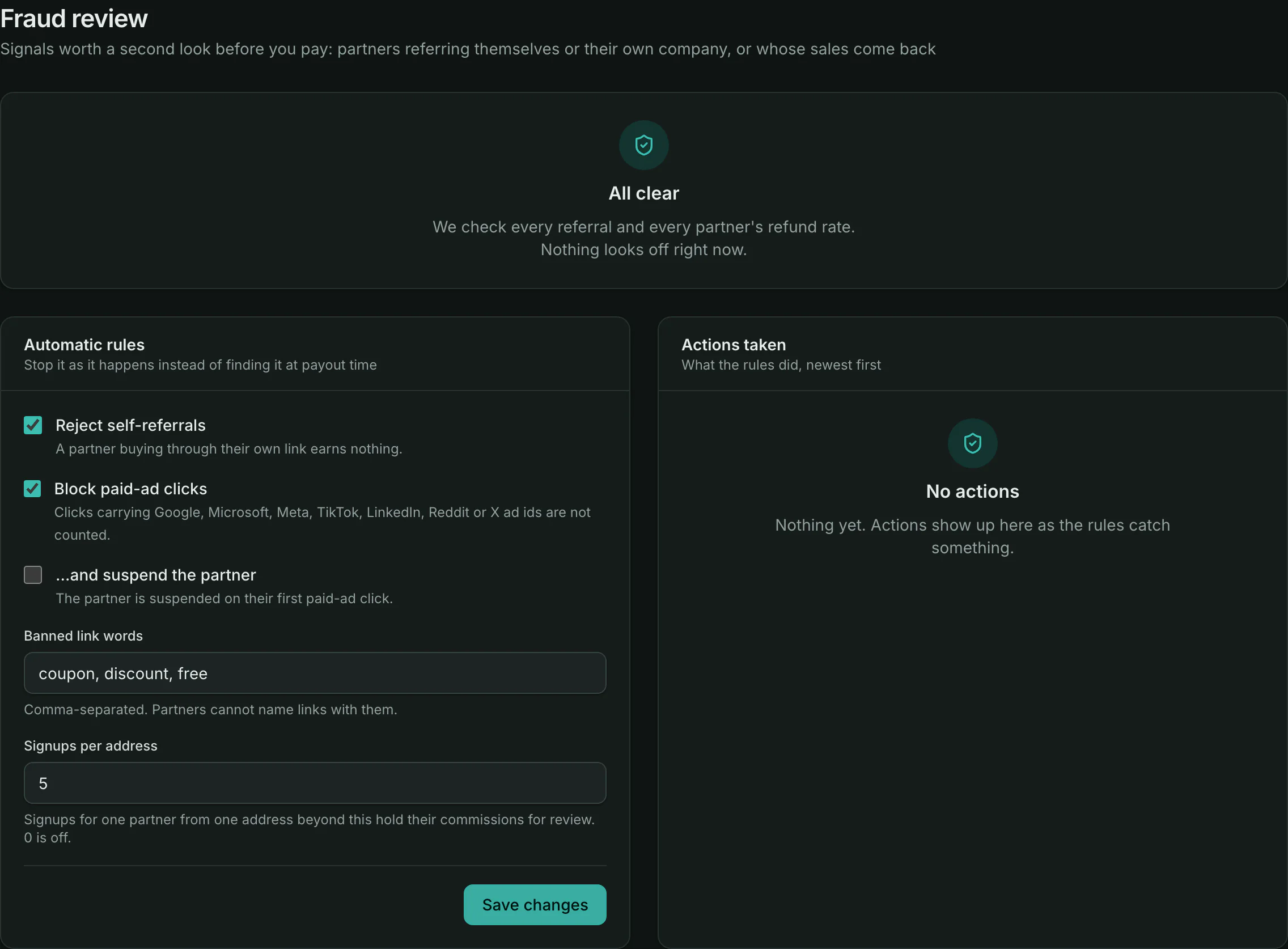
Fraud caught before payout.
Signals you can act on.
- Self-referrals
- A partner who refers themselves, by email or customer, is flagged, or rejected on its own if you switch that on.
- Paid-ad clicks
- Clicks carrying gclid, gbraid, wbraid, msclkid, fbclid, ttclid, li_fat_id, rdt_cid or twclid are refused when your program blocks paid ads.
- Reserved words
- Link names with banned or reserved words are refused.
- Duplicate addresses
- Many signups for one partner from one address flag their commissions for review.
- Refund patterns
- Partners whose sales keep coming back refunded stand out in the review queue.
- Review queue
- Every flagged commission waits with its signals until you decide.
The rest of the platform
One product, seven parts.
- TrackingEvery referral, credited.Links, codes and cookies that credit the right partner.
- CommissionsCommissions your way.Rules for every commission you want to pay.
- Partner portalA portal partners come back to.A branded home for every partner.
- PayoutsPayouts, handled.Pay every partner from one invoice.
- ReportsNumbers you can act on.Revenue, partners and sources, by day.
- EngagementPartners who stay active.Emails, campaigns and resources for partners.
Questions, answered.
Something else? Write to us.
What does fraud protection catch?
Self-referrals by email or customer id, paid-ad click ids when you block paid ads, banned or reserved words in link names, and many signups from one address.
Does it reject automatically?
Flagged commissions wait in a review queue with their signals until you approve or reject them. Switch on automatic rejection for self-referrals if you want it.

Launch your partner program today.
Fourteen days free, no card needed. Most programs are live in an afternoon.